

Which City Can Make 300 Companies Travel to It?
Ask where to hold a roadshow and you will get a list of the biggest cities in your market. It is a reasonable answer to the wrong question.
Company density tells you where firms are headquartered. That is available from any business directory, it is approximately true, and it is not what you need. What you need to know is where companies will travel to — because an event only works if people come.
Those are different cities, and the difference is measurable.
Catchment, defined
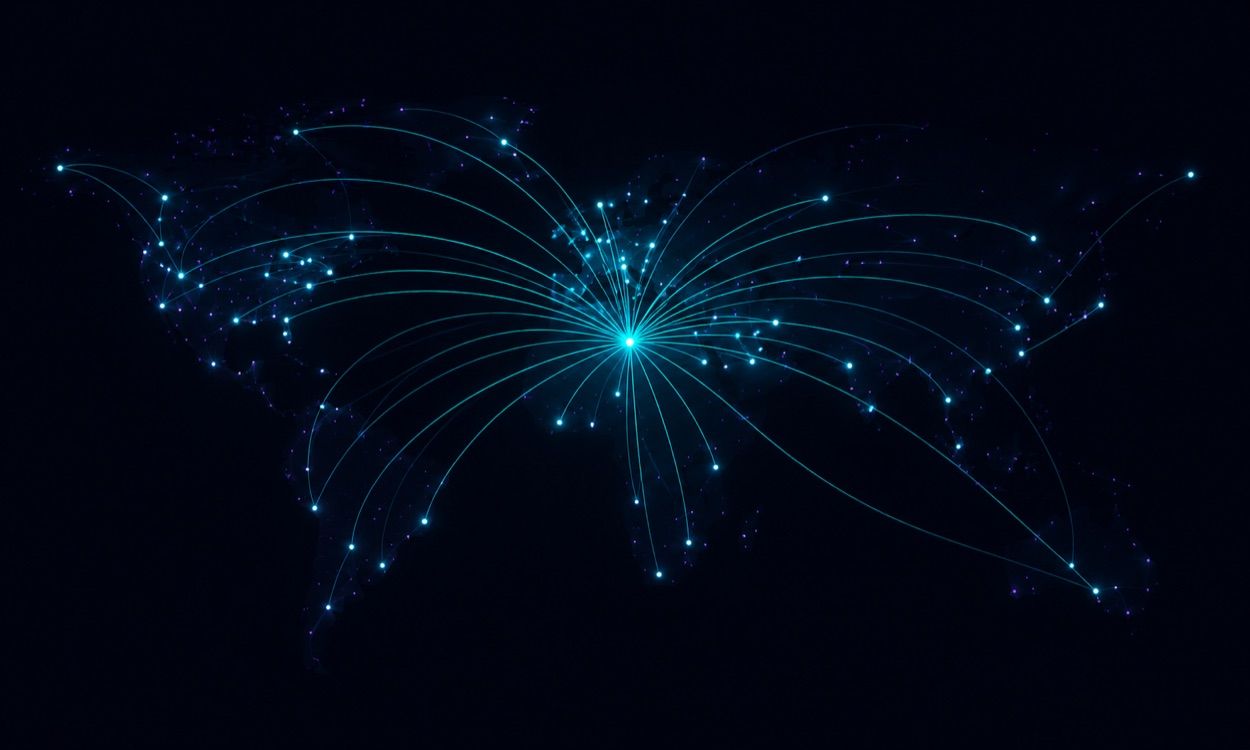
For any event, the participants came from somewhere. Some drove across town. Some flew in from another country. The distribution of those origins is the event's catchment — and aggregated across every event in a city, it tells you the city's pull.
A city with high density and low catchment is one where local firms attend local things. A city with high catchment draws people in: it is worth a flight, an overnight stay, two days out of the office.
Bengaluru versus Hyderabad is not a size comparison. Neither is Milan versus Frankfurt, or Dubai versus Riyadh. They are catchment comparisons, and the answer is often not the bigger city.
Why nobody else can compute this
Firmographic databases know where companies are registered. Location-data vendors know where phones move. Neither knows who travelled for a specific commercial reason, which is the only kind of travel that predicts whether people will come to your event.
Catchment falls out of participation history: the same records that show who exhibited also show where those companies are based. Twelve years of that produces something no vendor can assemble from present-day data, because it is a fact about behaviour over time rather than a fact about the world today.
What it answers
Where to host. If you need three hundred companies in a room, the question is which city can pull three hundred — not which city has three thousand headquartered in it.
Whether to attend. An event with a wide catchment is bringing you an audience you would otherwise need multiple trips to reach. A local event with a narrow catchment may be perfectly good, but it is a local event, and should be priced against local alternatives rather than international ones.
Where a market is really centred. Sometimes the industry's gravitational centre is not the biggest city or the capital. Catchment shows it plainly, and it occasionally contradicts what everyone in the industry assumes.
Where to expand. A city that already draws your category's companies is a city where a new event, office or roadshow has a natural audience. One that does not will require you to manufacture the reason to travel.
The honest limits
Catchment is computed from participants whose location we hold, which is not every participant of every event. It is a distribution derived from a sample, and like any sample it needs enough records before it means anything — below that threshold we show a dash and the reason rather than a shape drawn from a handful of points.
It also describes where people came from, not why. A city may draw an industry because of its airport, its cluster, its convention infrastructure, or simply because the flagship event has always been there. Catchment tells you the pull is real; it does not tell you what would happen if the anchor event moved.
Still: "which city has the most companies" is a question anyone can approximate. "Which city can I make three hundred companies travel to" is a question only participation history answers — and it is the one you were actually asking.
Calculate your Share of Presence at whr.ai.