

Why the biggest, most famous, most expensive event on your calendar might be your worst investment — and why, until now, you had no way to know.
Every year, companies spend hundreds of billions of dollars on physical presence — booths, sponsorships, speaking slots, delegations. It is one of the largest line items in B2B marketing. And it is allocated, overwhelmingly, by a method no CFO would accept anywhere else in the business: everyone else is going, so we're going.
Think about how the decision actually gets made. The big branded event raises its prices again. The organizer's brochure says what organizers' brochures always say. Your competitor booked a bigger booth, so you book a bigger booth. Nobody can tell you what last year's presence returned, so this year's plan is last year's plan plus ten percent. The industry's oldest question — is this event worth it? — has never had an answer, so the industry stopped asking it.
That was survivable when everyone was equally blind. It isn't anymore.
The signal that vanishes when the doors close
Here's what makes physical events strange: they are simultaneously the highest-intent commercial signal on earth and the least measured. When a company flies a team across the world, builds a booth, and stands in a room for three days, that is not a click or an impression. That is budget, approval, and conviction made visible. Where companies choose to stand tells you what they actually believe — about markets, about categories, about where their next customers are — more honestly than anything they publish.
And then the doors close, and the signal evaporates. No archive. No index. The internet, which measured everything else in commerce, never saw inside the rooms.
We spent twelve years recording it. Over a million events. Millions of editions. Hundreds of millions of participation signals — captured, cleaned of the noise and fake listings and spam that plague event data, verified, and connected into a graph of who was present, where, in what role, over time. It cannot be recreated by anyone starting today, no matter their budget. History only runs forward.
What changes when presence becomes measurable
When you can actually see the physical economy, the herd assumptions collapse one by one.
The biggest event in your category is not automatically your best event — sometimes the audience your buyers actually attend gathers somewhere cheaper, smaller, and three weeks earlier. The competitor whose booth you've been matching may be quietly walking away from that show and placing bets in a market you haven't noticed. The "must-attend" flagship may be fading — fewer exhibitors returning each edition — while an event you've never considered compounds year over year. A first-time speaking slot by an unfamiliar company in your category may be the earliest visible signal of a market entry that intent data will not show you for another two quarters.
None of this is visible from an organizer's brochure, because organizers are incentivized to sell you the room, not to tell you the truth about it. It is only visible from the outside — from a neutral record of what companies actually did, across every room, over years.
That is what we mean when we say: see events as they are, not as organizers sell them.
The question to start with
Not "which events should we attend?" — that comes later. Start with the question you've never been able to answer: of all the attention available in the rooms where your market gathers, how much is yours?
We call it Share of Presence. It does for the physical world what share of voice did for media and share of search did for the web — one number that tells you where you actually stand, computed from what you and your competitors actually did, not what anyone claims.
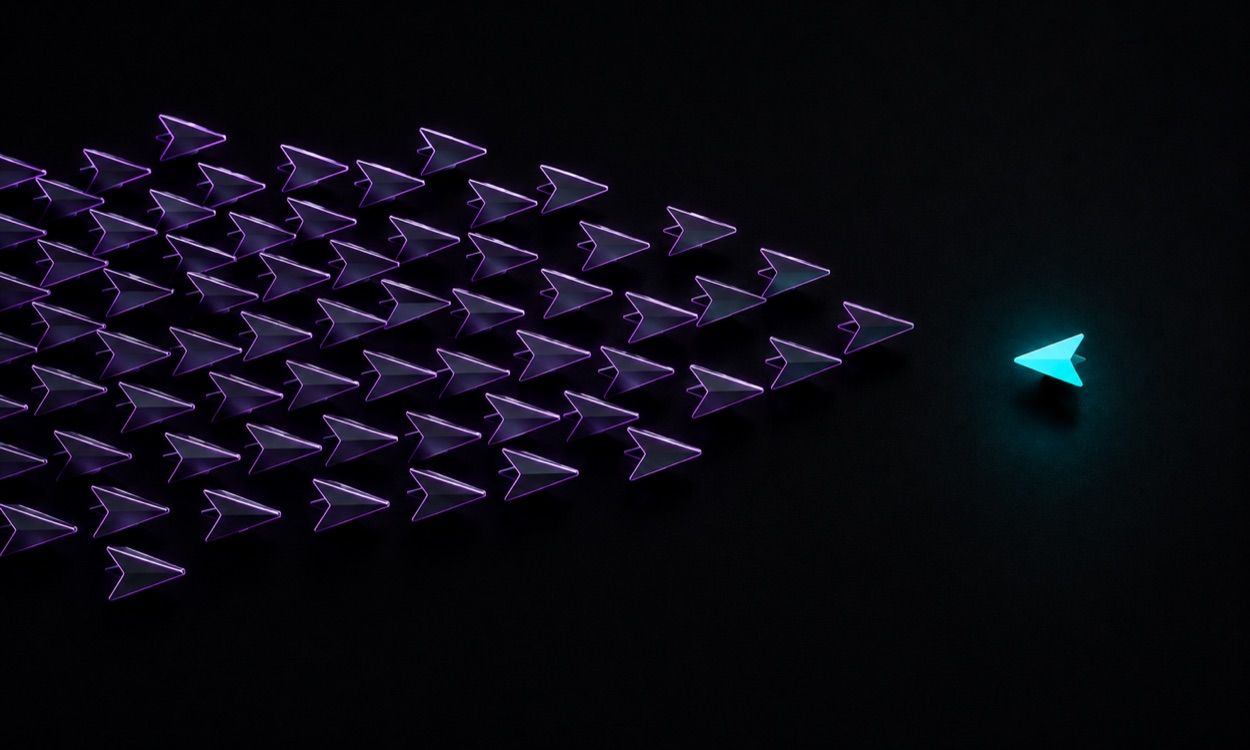
In a world where AI makes intelligence abundant, following the herd is no longer a strategy. It's just the most expensive way to avoid a decision.
Calculate your Share of Presence at whr.ai — enter your domain, see the footprint we've already mapped.